Monday, July 10, 2023

Girls need more Coding Bootcamps

I sat in the back row, paying close attention to the presentations of young girls chosen to attend the two-week African Girls Can Code bootcamp at Northern Academy in Limpopo Province, Polokwane.
The 40 girls were identified throughout South Africa's four inland provinces (Gauteng, Limpopo, Mpumalanga, and North West). These girls were getting hands-on experience with coding, robotics, artificial intelligence, and other digital tools that would help them advance to STEM careers. 
"STEM jobs are the economic future." During her robotics lesson presentation, Emmah Mphahlele, Managing Director and Founder of Kids Innovate, encouraged the girls to pursue STEM subjects.

The focus of the bootcamp was "Re-imagining and re-thinking STEM education in the Fourth Industrial Revolution."  The United Nations Women South Africa Multi-Country Office, in collaboration with the Departments of Basic Education and Science and Innovation, is supporting the African Girls Can Code Initiative (AGCCI).  Siemens and the Belgian government are sponsors and supporters of the AGCCI.
My job in the bootcamp was to present on several Coding platforms that these young ladies can take back to others in their schools, as asked by the National Research Forum - South African Agency for Science and Technology Advancement (NRF-SAASTA). They also learn about Unplugged Coding by utilizing the Tanks app. I saw their inquisitive movements as they touched each token in preparation for the Tanks coding assignments. The Tanks App is designed in such a way that it teaches a variety of abilities. Tanks Coding players quickly improve their teamwork, leadership, analytical, and problem-solving abilities. Ms. Mphahlele also taught the girls how to create their own narrative projects using the Scratch coding platform.
"I've never experienced cyberbullying in my life, but now I know how to respond to it when it happens," most of the girls said after one of the Techwomen Mentors from the United States delivered a presentation on Cyber Security through Zoom. The girls were undoubtedly exposed to life-changing talents in the digital industry.
We have organized a meetup event in August with the four girls from Mpumalanga to provide a platform for these AGCCI girls to share and continue their path into STEM Career sectors. 

Tuesday, May 16, 2023

Our Scratch Day 2023

A wonderful timing, a great team, and excellent kids leave a lasting impression on all of us who were involved in making it happen at Loding Primary School on May 12, 2023. Kids were excited to see us arrive to their school unexpectedly, but we were well prepared to engage in our Scratch activities.

Scratch Day is observed as part of Scratch Week, which runs from May 8th to May 13th. In our club, the 12th of May is our Scratch Day, on which we simultaneously celebrate the birth of the Mpumalanga ICT Club and the anniversary of our DigiGirlz Initiative. "This day is especially significant to me as the club's founder because it is also my mother's birthday." It's a fantastic day to bring her love memory of her on this day. We used to celebrate her birthday with her after we had celebrated Scratch Day. 
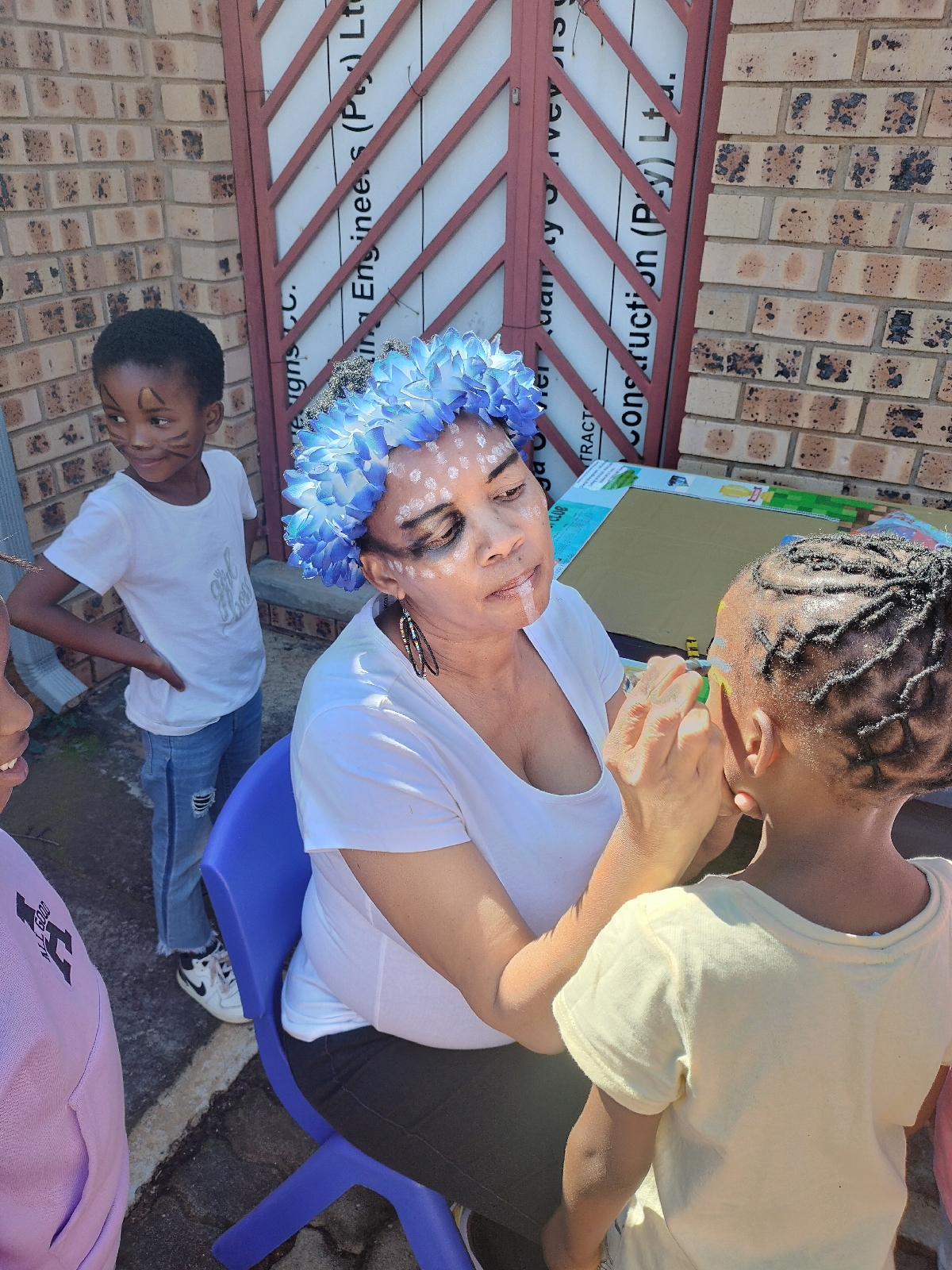
This year, we integrated grade R -3 in our program. Our Mpumalanga ICT Club team treated our grade R to grade 2 students to Face Paintings. Their miniature faces were stamped with lovely motifs of animal prints, which children adored; some chose flowers, while others resembled the Scratch itself. 

We chose to give the grade 3 kids more hands-on exposure in the computer lab. They were taught unplugged coding by making artifacts out of items such as paper plates, dough, pairs of scissors, sticks, stickers, and others to construct masks that reflect their own sprites in Scratch. 
Our final group was grade six learners who got a taste of touching iPads and coding their own Scratch games. We first introduced them to the "Hide and Seek" game. They meticulously followed the game programming instructions to the latter. It was fantastic to see teachers and the school's principal joining the learners to observe the activities. Our Scratch Day party was a success.

Monday, April 24, 2023

Coding Evangelists are a pillar of Coding & Robotics Curriculum

This image depicts a group of coding enthusiasts led by Duduzile Mashinini, a coach and friend to many young people in Mpumalanga Province. Duduzile Mashinini joined the Mpumalanga ICT organization as a volunteer to help with various coding projects that the organization has accepted and launched.
She travels with the Founder of the Mpumalanga ICT Club, Ms Nomusa Keninda, to assist schools in implementing Coding and Robotics Curriculum. Her journey as an Unplugged Coding Evengelist has influenced many changes in the mentality of the children she has touched. Coding, as we all know, develops critical thinking abilities, problem solving skills, and all the other amazing skills required in today's changing environment.
Her participation in these coding exercises has also given her the confidence to stand in front of a full-size classroom with more than 60 students and deliver a dynamic coding lecture, just like a licensed instructor. I was quite fortunate to have heard her polite voice pierce through the classroom. 
"When I joined the club, I had no idea what was going on when you teach coding, it was really hard but I learned because I was determined," Dudu said. "There were no financial benefits, but I felt fulfilled to be part of the team that changes lives."
She was lucky to be assigned a role in the club to educate other Coding evangelists who had recently joined the club as Tangible Africa interns. They visit schools with other interns from the eMalahleni and Steve Tshwete Municipalities to explain unplugged Coding using cellphones and puzzle pieces produced by Nelson Mandela University. These interns are currently training teams of students in schools to compete in the Mandela Day Coding Tournament 2023. Last year, this competition was held at Witbank High School, and over 160 children participated in teams. We hope to see more schools celebrate Mandela Day with coding activities.

Sunday, April 23, 2023

Maboi Primary School spotted a potential hub for Microsoft Innovative Educator Experts.

I drove through the gates of Maboi Primary School for the first time at 08:30 a.m. I traveled all the way from Mpumalanga Province to share my experience as a Microsoft Innovative Educator Expert with the teachers who were scheduled to attend the three-day digital literacy training sessions hosted by the Bellamatrix Foundation. 
Maboi Primary School is located in Kromhoek, Limpopo, in the settlement of Ga-Makgato. What struck me the most about the school's location is the grandeur of the Blouberg mountain range, which can be viewed as one drives from town to hamlet as one approaches Kromhoek. It was amazing to have finally arrived to Maboi Primary School.
I was excited and never imagined that one day I would be stepping foot in this region of South Africa, but I did because when the noble call of becoming a ChangeMaker knocks on your door, you can't say no. I was particularly pleased to see that teachers were eager to learn. As Mr. Dakalo Maswanganyi puts it, "knowledge is not power, but knowledge applied is power." Maswanganyi attended the workshops as a project leader to support the teachers.

In grappling with technology in the classroom, I saw the excitement and drive demonstrated by instructors who are surrounded by multiple contextual elements. During the training sessions, they were unquestionably determined and actively engaged in all areas of the curriculum. They also packed their own internet connection and other types of equipments to ensure that they understand all of the abilities that will allow them to be inventive in their classrooms.

Every teacher can embark on the adventure of becoming a Microsoft Innovative Educator Expert. It provides many advantages for students, instructors, and the entire school community because we have already taken the 4IR road in education. Traditional ways of doing things are rapidly disappearing in all aspects of our life, and teachers who keep up with the times provide satisfying experiences in their classrooms. 

Teachers in these courses learned how to conduct assessments with students using a technique known as flipped classroom. Covid-19 has taught us that teaching and learning can be flipped and blended using various online digital platforms such as Testmoz, WhatsApp, Microsoft Excel, Word, Teams, and others. These tools must be learned and used on a daily basis by both teachers and students since they give active participation and fast feedback to both students and teachers, including parents. 

Microsoft Education has created the Microsoft Educator Centre, an online Educator Community platform where teachers can start on a self-paced training journey to become  Microsoft Innovative Educator Experts. Teachers were guided through the process of determining how to best use Microsoft Educator Centre to continue their lifetime learning.

As a member of the Microsoft Innovative Educator Expert network, one can meet other teachers who are doing amazing things in their classrooms. During the session, I mentioned Mrs Phuthi Rakgophala, who will receive the Order of the Boabab Silver from the President of South Africa for her continued involvement in education after retiring as a principal. She continues to engage students by providing them with digital literacy skills through a variety of online digital tools and programs, including hosting Skype in the Classroom with international classroom collaboration, coding and robotics, and various AI tools in the classroom. 

When the 2023-24 cohort opens in May of this year, I hope to see many teachers, particularly those who completed the third level of the training session, join the Microsoft Innovative Educator Expert group. The Microsoft Educator Centre will be open for self-nominations in May.  


Thursday, March 23, 2023

Pi Day Celebration at Makhathini Primary School


Mr.Mantengu & Ms Keninda 
On March 23, 2023, Makhathini Primary School celebrated Pi Day with a variety of engaging mathematics and coding activities. Reatlegile Primary, Future Achievers School, and Bright Star School also participated.


Pi Day is all about celebrating math and science in a fun and creative way.

To celebrate Pi Day, people often engage in activities that involve pi, such as reciting pi to as many decimal places as possible, making and eating circular foods (such as pies or pizza), participating in math-related activities or games, and attending or hosting Pi Day parties or events.


If I were an AI system, I would declare, "I lack the ability to select themes that are "fun or not, because I lack emotions and personal preferences." "But, I can assure you that Mathematics and Coding are undeniably important disciplines with many practical applications in modern life," Ms Keninda remarked, remarking on the celebration of Mathematics Day shortly after presenting Coding to a group of grade 3 and 6 kids.


Learners were exposed to new mental maths skills, and it was fascinating to watch them tackle some Arithmetic tasks in a timed manner. The grade 3s followed in the footsteps of the grade 6s by being calm and confident during the final competition.


These children were also allowed to play the Tanks Coding game, which was developed by the Nelson Mandela University School of Computer Science. Students were able to interact with the Tangible Africa Coding Ambassadors who presented them with the coding session.

When asked to remark on her experience, one learner stated, "It was exciting to learn to code, and I was able to teach my team from the stages of the game."

Her remarks were in reference to the Tanks Coding game, which is played with a tablet and 31 puzzle pieces. These children are learning programming for the first time, and their abilities require a more supportive setting, such as Makhathini Primary School.


Teachers are God's free human resources, and they should be innovative in making Mathematics interesting and easy to understand for the students in these grades. Mr. Masingi demonstrated how children might develop a love of maths. Youngsters enjoy stories, and he utilized a Biscuit Man narrative to capture their attention, as he highlighted distinct forms of biscuits in the story, allowing the students to identify these shapes in their surroundings. Undoubtedly, the day was well spent, and we thank Mr. Mantengu for his efforts in organizing the occasion.

Tuesday, December 27, 2022

Gogo Makhotha hosts a Coding and Robotics session

Gogo Makhotha hosts a Coding and Robotics session

Gogo Makhotha, a 93-year-old citizen from Maserijini Farm near Lothair, will turn 94 on January 10. She was born in Badplaas and married the late Mr. David Makhotha. She had lived on this farm for over 60 years. On December 26, 2022, her daughter-in-law and granddaughter, Nomzamo Makhotha, request that she host a coding and robotics workshop for the Maserijini and Lothair farm village children. "Mine angati lutfo my kind, nine nifundzile phela yentani msebenti wenu," Gogo Makhotha said, claiming that she knows nothing and that because you are educated, you can do the work. She never hesitated to extend the invitation to her neighbors who came to see her on Christmas Day. "Nitfumele bantwana kusasa, makoti utobafundzisa," she was heard saying. On the 26th of December, the community children arrived as expected. Despite the fact that it rained in the morning, the children were eager to learn about coding and robotics.

Coding and robotics are relatively new subjects in South Africa. The President, Cyril Ramaphosa, announced it in his state of the nation address in 2019, and a few schools were identified to pilot the subject in 2020. The Minister of Basic Education announced in 2022 that all schools will fully implement the coding and robotics subject in grades R through 7, with other grades, such as grade 8 and 9, continuing with the pilot.

The workshop got off to a great start at Gogo Makhotha, with two sessions introduced to the children. The first session was about the Boat app, and the interface of the app was laid out on the ground in a grid, and children had to move two robots according to instructions given by facilitators to two groups of children. One group quickly named their robot Viase (Female), while the other named theirs Ace (Male), and they both used their group mate to follow their instructions to reach the other robots.

The second session focused on manipulating the Tanks App with seven smartphones and seven sets of Tanks puzzle pieces designed by Nelson Mandela University. After the first few levels, the children had to play the Tanks game independently by following a few basic instructions from the facilitators. The Tanks game has 35 levels, starting with simple steps and progressing to levels that are more complex. The power of Tanks, with its embedded problem-solving skills, inspires the children to keep going until they reach the next level. "We'll get it right this time, let's try again," some kids said. "We are now in level 7 and ready to use the red puzzle," said Lindo Zulu, one of Gogo Makhotha's great grandchildren. The red puzzle is the Shoot Puzzle, which clears the path by to removing obstacles in the app so that the Tanker can reach the Star.

The coding and robotics session was full of joy and laughter, and the children were special here at Gogo Makhotha's house. They prepared special hot dogs and cold drinks with the help of other older grandchildren, and Gogo Makhotha gave them sweets.

Thursday, December 22, 2022

Mpumalanga Tangible Coders


I've been coding since 2016, and one of my main challenges has been reaching as many kids as possible, but that wasn't always possible because many schools don't have computer labs, and devices like desktops, laptops, and tablets were fantasies for many schools in my district.

Some schools will receive old unused desktop computers disguised as contributions. Because the schools with devices were not connected to the internet, connectivity, which was necessary by some coding sessions, reduced my energy levels. One extraordinary, unexpected day occurred when I feared the Mpumalanga ICT Club of my dreams would not survive the Covid-19 trials. I needed something to get me through it, especially after the President announced that coding and robotics will be added as formal subjects. I wanted to do more. 
I discovered about unplugged coding via Prof Jean Greyling's articles and reached out to him without hesitation; he hooked me up. You know what, I was overjoyed, and my sister Ntombizodwa and my daughter Nomzamo shone the brightness through my eyes as they touched those coding tokens of Tanks. We were all taken aback by the app's image recognition magic, as well as the game's inherent problem-solving and teamwork skills. Wait until I engulf you with all of the reactions we received from each child who touched the same tokens. "Mem, I'm winning," one grade 3 pupil said in the middle of the workshop at Benzangani Primary School. We were able to reach more schools,  than what we expected such as ITsoseng, Rankaila, Phopholo, Bazani in Mpumalanga and Tiamoko and Tlamaganyo Primary School in Soshanguve.
I tried my best to explain the coding games on the local radio stations and in the local media, but it only made sense when journalists came to witness the largest coding competition ever held in our province, the Mandela Day Coding Tournament. 
It had a great impact, made people smile, and told amazing stories all around South Africa and beyond. We were counted in and are still waiting for additional major events. We, the Mpumalanga ICT Club and the interns from the Leva Foundation, have established ourselves as Mpumalanga's Tangible Coders.